
The Hidden Architects: Meet the Set-Piece Coaches Revolutionizing Modern Soccer
The scene is a symphony of organized chaos. It’s the 86th minute of a tense, goalless North London derby. A free-kick is awarded, 25 yards from goal. As players jostle in the box, one Arsenal attacker peels away from the wall, creating a sliver of space. Another makes a decoy run towards the near post, dragging two defenders with him. The ball isn’t lofted into the expected danger area; instead, it’s whipped with low, fierce pace into that vacated zone. Defender Gabriel Magalhães, timing his run against the grain of the defensive shuffle, meets it perfectly. The net bulges. The Emirates erupts. Arsenal wins 1-0. For the casual fan, it’s a moment of opportunistic brilliance. For those in the know, it’s the culmination of hundreds of hours of meticulous, secretive work by a man few supporters could name: set-piece coach Nicolas Jover.
This is not an isolated incident. Across the Premier League and Europe, a quiet revolution is being orchestrated from the training ground. In an era where defenses are more organized than ever and margins for victory are razor-thin, the set-piece has been transformed from an afterthought into the most efficient weapon in football. The masterminds behind this transformation are not the celebrity managers on the touchline, but a new breed of specialist: the set-piece coach. These hidden architects are applying data science, video analysis, and psychological warfare to turn dead-ball situations into a predictable source of goals, fundamentally changing how matches are won and lost.
The Rise of a New Role: From Part-Time Duty to Essential Staff
For decades, set-piece routines were often an ad-hoc affair. The tallest players would amble forward for a corner, while free-kicks were largely the domain of the player with the “best foot.” Responsibility was diffused—sometimes an assistant coach would oversee things, other times senior players would take charge. It was inconsistent and under-prioritized.
The shift began with the data revolution. Advanced analytics revealed a shocking truth: a disproportionate number of goals, especially in tightly-contested matches, came from set-pieces. In the 2022/23 Premier League season, nearly 30% of all goals were scored from dead-ball situations (including penalties). For mid-table and lower-budget clubs, this percentage was even higher. This wasn’t luck; it was a glaring, exploitable market inefficiency. Enter the specialist.
Clubs realized that defending and attacking set-pieces required specific, dedicated expertise—a blend of geometric understanding, statistical analysis, and repetitive coaching. The role of the set-piece coach was born. No longer a peripheral figure, they are now key members of the first-team staff, reporting directly to the head coach and commanding significant salaries. Their mandate is clear: create and drill automated routines that yield goals, and design defensive schemes that prevent them.
Spotlight on a Specialist: Nicolas Jover and the Arsenal Blueprint
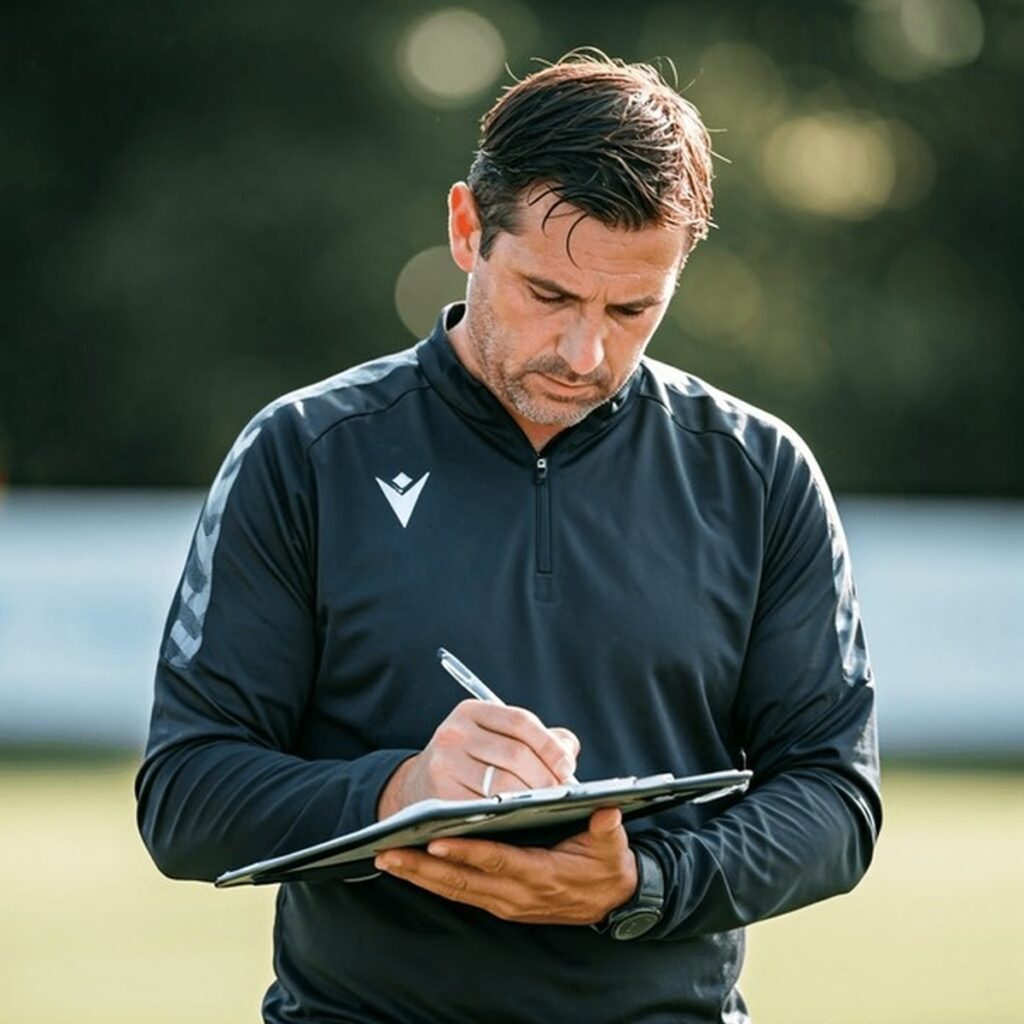
To understand the impact, look no further than Arsenal’s Nicolas Jover. Hired by Mikel Arteta in 2021 after stints at Brentford and Manchester City, Jover is the archetype of the modern set-piece guru. His influence has been transformative.
In the 2022/23 season, Arsenal scored a league-leading 22 goals from set-pieces (non-penalty), a cornerstone of their title challenge. Defensively, they were among the hardest to score against from dead balls. Jover’s philosophy is built on preparation, variation, and “trigger-based” automation.
Anatomy of a Jover Goal: The “Block and Release” Corner
Let’s deconstruct a signature Arsenal routine from that season, used to great effect against Aston Villa.
- The Setup: Four Arsenal players line up on the edge of the six-yard box in a tight cluster. This creates a focal point of anxiety for defenders, who instinctively mark zonally around them.
- The Trigger & The Block: As the taker begins his run-up, two players from the cluster break towards the near post. Their primary job is not to win the header, but to act as moving blockers, screening the defenders marking Arsenal’s main threats.
- The Release & The Finish: At the precise moment the blockers engage, the real threats—Gabriel or William Saliba—hold their run before accelerating into the space cleared by the blockers. The ball is delivered not to where the players start, but to where they will arrive. The timing is rehearsed to the step. In this instance, Gabriel lost his marker, powered into the vacated space, and headed home.
This routine isn’t about individual brilliance; it’s about collective geometry and timing, practiced until it becomes muscle memory. Jover uses extensive video analysis of opponents to identify weaknesses in zonal marking—such as a defender who is slow to track runs or a goalkeeper reluctant to come off his line—and then designs 5-6 tailored routines for each match.
The Data Point: Quantifying the Advantage
The numbers behind this set-piece arms race are staggering.
| Club (22/23 Season) | Set-Piece Goals (Non-Penalty) | League Rank (SP Goals) | % of Total Goals from Set-Pieces |
|---|---|---|---|
| Arsenal | 22 | 1st | 31% |
| Everton | 19 | 2nd | 44% |
| Tottenham | 18 | 3rd | 35% |
| League Average | ~12 | – | ~28% |
Source: Adapted from Opta/Premier League data
The table reveals two key insights. First, top clubs like Arsenal use set-pieces to pad their goal difference at the top. Second, for clubs like Everton, set-pieces were a literal lifeline, accounting for nearly half of all their goals and being central to their survival. The set-piece coach, therefore, is both a weapon for contenders and a survival kit for strugglers.
The investment is justified by the return. Analysts estimate that each additional set-piece goal gained (or conceded) over a season can be worth 1.5-2 points in the final league table. In a multi-billion pound industry where a single league position can be worth millions, hiring a £200,000-per-year specialist is arguably the most cost-effective signing a club can make.
The Ripple Effect: How Set-Pieces Are Changing the Game
The rise of the specialist has created a strategic arms race with wide-ranging consequences:
- The Tactical War: Matches now feature a hidden duel within the duel. Set-piece coaches spend the week trying to out-predict each other. Will they use a near-post flick-on or a direct delivery to the far post? Will they take a short corner to change the angle? Teams now have “playbooks” of 20-30 routines, with specific ones called via coded signals from the bench or on-pitch players.
- Player Recruitment: The physical profile of defenders is evolving. Being tall is no longer enough; now, clubs seek defenders with the agility to navigate a maze of blocks, the spatial awareness for zonal marking, and the aerial dominance of a traditional center-forward. Attackers, meanwhile, are valued for their movement and blocking ability as much as their leap.
- The Defensive Focus: Elite defensive set-piece work is now about “switching on” collectively. It involves meticulous pre-match briefings with video walkthroughs of the opponent’s top three routines. Goalkeepers have become commanding directors, organizing their defensive lines to deny space. The first five minutes after halftime, when concentration can dip, are now a red-alert period for set-piece coaches.
Conclusion: The Democratization of Goals
The revolution led by figures like Nicolas Jover, Brentford’s Bernardo Cueva, and others represents a fundamental shift in football philosophy. It posits that a significant portion of the game’s crucial moments can be removed from the realm of chaos and brought under systematic control.
This has a democratizing effect. While the richest clubs will always buy the best open-play talents, the set-piece is a great equalizer. A well-drilled, physically organized team with a clever coach can consistently steal goals and points against superior opposition. It has turned a niche skill into a central pillar of the sport.
The next time you see a defender rise to head in a crucial goal from a corner, look beyond the scorer. Look to the touchline, not at the celebrating manager, but at the calm, analytical figure perhaps holding a tactical binder. The game within the game has been won long before the ball hits the net, in a quiet meeting room by football’s hidden architects. They have proven that in the modern game, there is no such thing as a dead ball—only a meticulously planned opportunity waiting to be executed.